Back to Blogs

Are Whitening Strips Safe for Daily Use?

Whitening strips brighten teeth in brief cycles, but daily use risks enamel erosion, nerve sensitivity, and gum burns.

November 6, 2026
•
5 min read
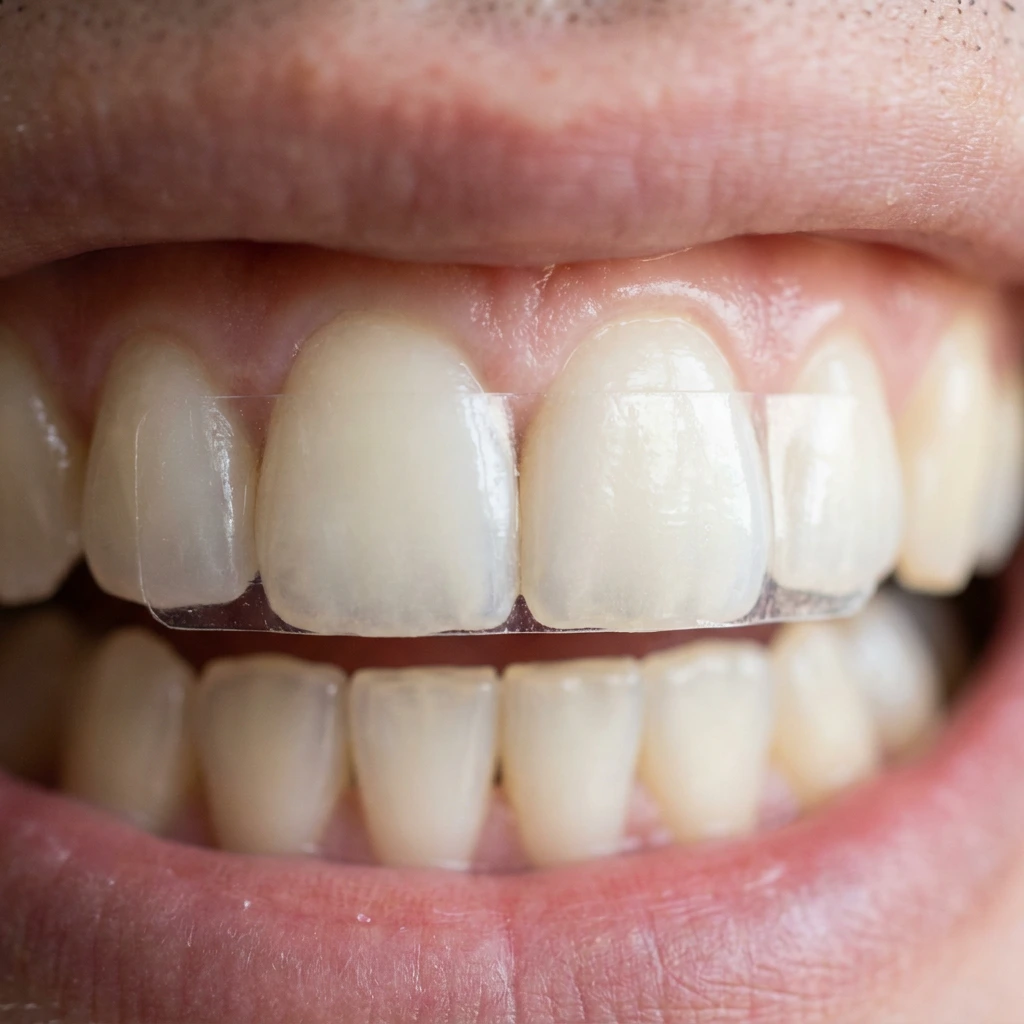
A close-up view of a patient's mouth with a clear whitening strip applied across the upper front teeth.
Back to Blogs
A close-up view of a patient's mouth with a clear whitening strip applied across the upper front teeth.

Are Whitening Strips Safe for Daily Use?

Whitening strips brighten teeth in brief cycles, but daily use risks enamel erosion, nerve sensitivity, and gum burns.

November 6, 2026
•
5 min read

Can You Use Whitening Strips Every Day?

Whitening strips are not safe for daily, indefinite use. While most over-the-counter products are designed for consecutive daily application over a structured 10 to 14 day period, using them continuously as part of your permanent routine can erode enamel, irritate gum tissue, and trigger severe nerve sensitivity.

Over-the-counter whitening strips rely on peroxide-based bleaching gels to lift extrinsic and mild intrinsic stains from dental enamel. These chemical agents work by penetrating the microscopic pores of your teeth to break down pigmented compounds. While effective when used as directed, peroxide requires structured recovery time between treatment cycles to allow your teeth to remineralize naturally.

At Advanced Dental & Implant Center in Monument, CO, Dr. Eric Nguyen regularly advises patients on how to brighten their smiles without compromising structural oral health. Understanding the biological boundary between routine hygiene and chemical bleaching is essential for maintaining strong, healthy enamel over time.

A patient stands in a bright bathroom looking into the vanity mirror while holding a packet of teeth whitening strips.

How Often Should You Use Whitening Strips?

You should only use whitening strips once or twice per year in targeted treatment cycles lasting between one and two weeks. Continuous application beyond the manufacturer's designated timeframe provides diminishing returns and increases your risk of permanent enamel thinning and soft tissue inflammation.

Exceeding the recommended usage schedule does not make teeth whiter; instead, it exposes delicate underlying dentin as enamel wears down. When considering your cosmetic options, balancing treatment frequency helps preserve oral health:

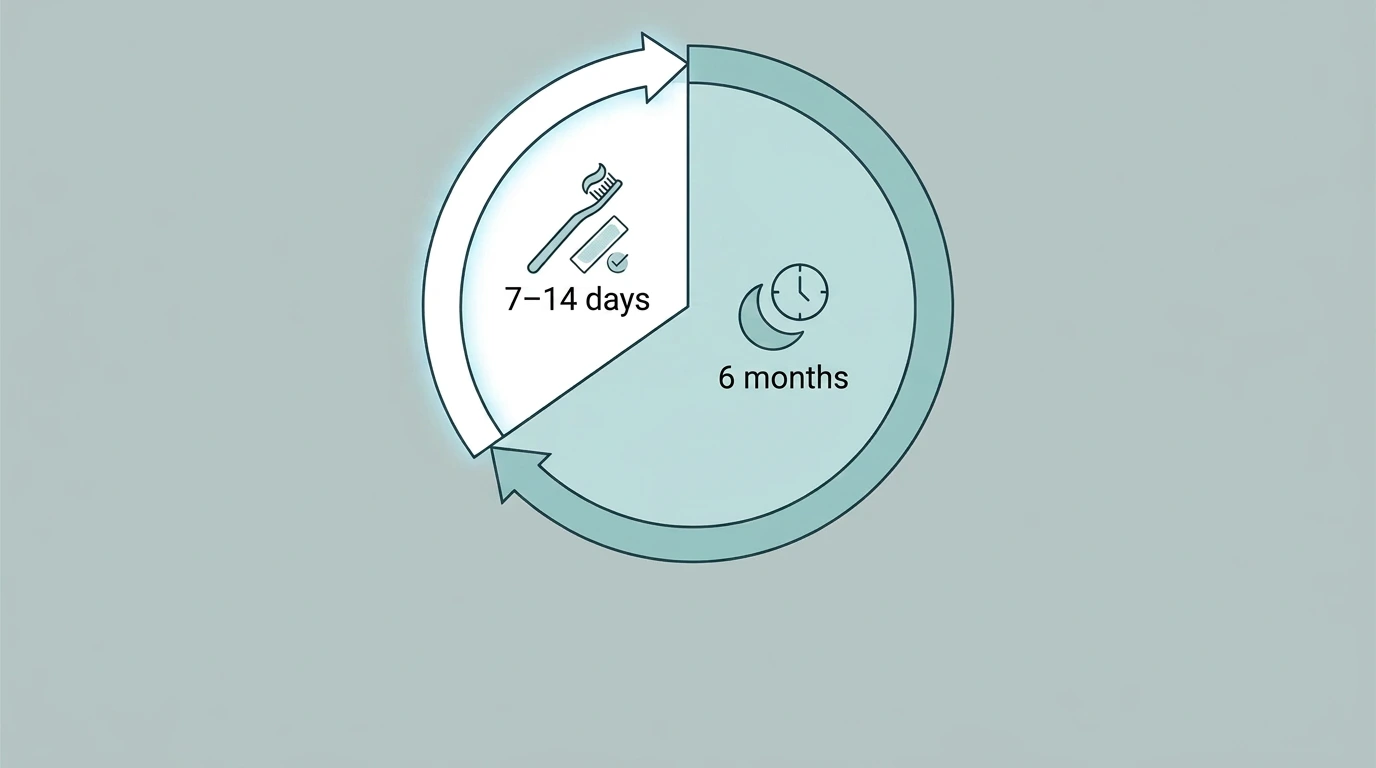
  • Standard treatment cycles: Applying strips once daily for seven to fourteen consecutive days allows active peroxide agents to address surface stains safely without overtaxing structural enamel.
  • Touch-up applications: Using a single strip once every few months can help maintain brightness after dietary exposure to coffee, tea, or berries without repeating an entire course.
  • Rest intervals: Giving your smile at least six months of recovery between full whitening cycles allows natural saliva minerals to replenish and protect tooth surfaces.
  • Professional supervision: Consulting a dental team prior to starting any whitening regimen helps identify underlying decay, gum recession, or restorations that cannot be bleached.
A circular timeline diagram displays a small section labeled 7–14 days with toothbrush icons and a larger section labeled 6 months with clock and moon icons.

What Happens to Enamel When You Overuse Whitening Strips?

Overusing whitening strips can strip away protective minerals, causing demineralization and enamel erosion that exposes yellow dentin underneath. Because dental enamel cannot regenerate once lost, chronic peroxide exposure ultimately weakens your teeth and makes them more susceptible to decay, chipping, and rapid discoloration.

Hydrogen peroxide and carbamide peroxide are effective oxidizing agents, but excessive contact degrades the organic matrix of enamel proteins. Understanding the physiological consequences of chronic strip use highlights why moderation is vital:

  • Enamel surface roughness: Frequent acid exposure micro-etches the enamel surface, creating microscopic grooves that actually trap new food stains more rapidly.
  • Dentin exposure: As outer enamel thins, darker underlying dentin shows through, creating a translucent or grayish appearance along the biting edges of teeth.
  • Gingival chemical burns: Excess bleaching gel that squeezes onto delicate gum margins causes tissue blanching, chronic redness, and uncomfortable gum sensitivity.
  • Increased caries risk: Compromised enamel provides less defense against oral bacteria, which can accelerate the development of cavities beneath worn surfaces.
A light purple callout box displays the text Enamel Cannot Regrow, accented by a tooth shield icon in the upper left corner and a leafy sprig in the lower right.

How to Manage Tooth Sensitivity From Whitening Strips

To manage whitening sensitivity, stop using the strips immediately and switch to a potassium nitrate desensitizing toothpaste. Sensitivity occurs because bleaching agents travel through microscopic dentinal tubules directly to the inner dental pulp, causing temporary inflammation that reacts sharply to hot, cold, or sweet temperatures.

Mild sensitivity often resolves within forty-eight to seventy-two hours following the cessation of chemical bleaching. If you experience mild discomfort during an approved treatment window, spacing your applications to every other day can give the pulp chamber time to rest. Applying topical fluoride treatments or calcium-phosphate pastes can also help occlude open dentinal tubules, reducing uncomfortable thermal shocks.

Patients in Monument experiencing persistent pain after at-home bleaching should visit our office for comprehensive dental exams & X-rays. Unresolved discomfort may indicate undiagnosed enamel fractures, leaky fillings, or deep decay that requires restorative intervention rather than cosmetic bleaching.

A patient wearing a sweater brushes her teeth with a toothbrush while holding a tube of toothpaste over a bathroom sink.

Schedule a Smile Consultation in Monument

If you are wondering how to safely brighten your teeth or are experiencing tooth sensitivity from at-home bleaching, our team is here to help. Contact Advanced Dental & Implant Center in Monument, CO, to schedule an appointment with Dr. Eric Nguyen and explore your personalized cosmetic options.

Welcoming dental office at Advanced Dental & Implant Center

Signs You Are Overusing Dental Whitening Products

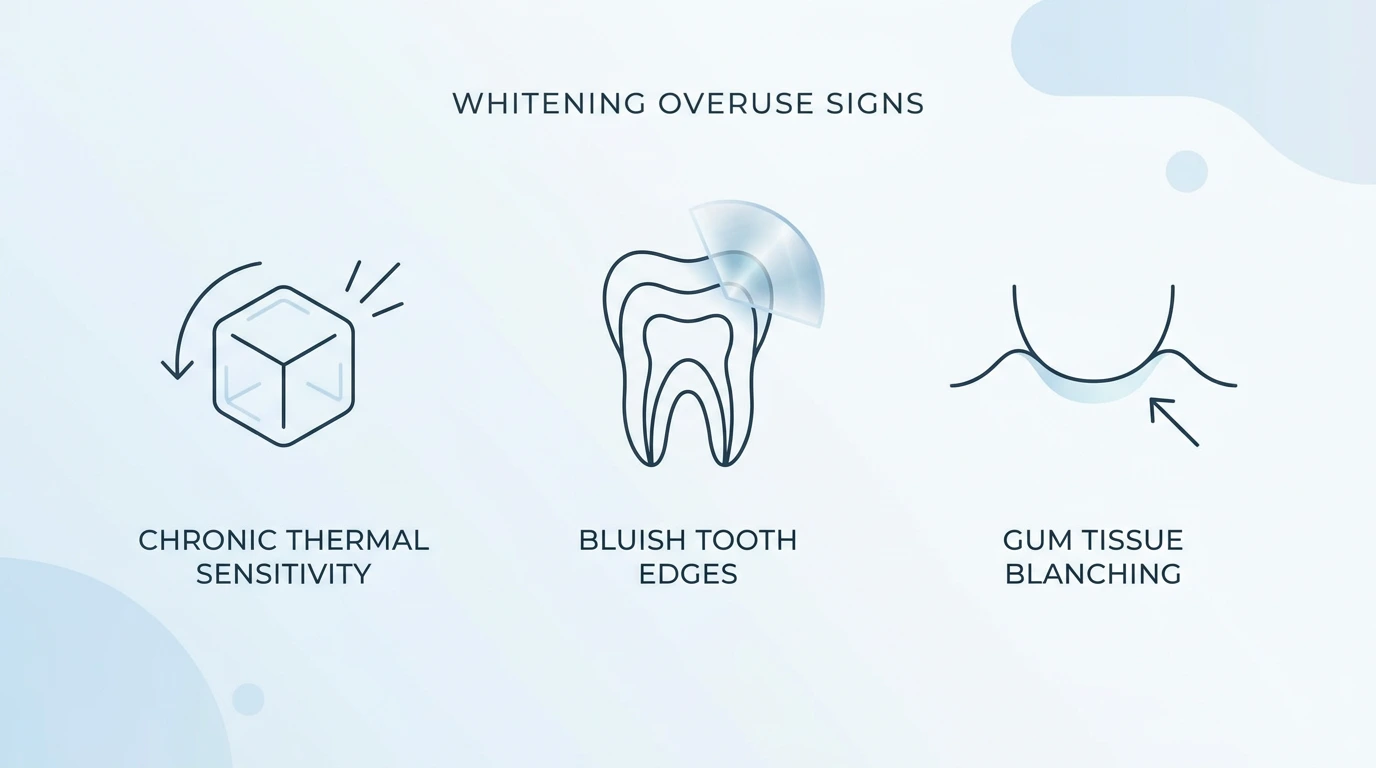
Key signs of whitening strip overuse include chronic thermal sensitivity, gum tissue blanching, bluish tooth edges, and uneven blotchy white spots. If your teeth feel sore to the touch or look increasingly dull despite frequent bleaching, you have likely exceeded safe treatment thresholds and damaged enamel.

Recognizing these clinical warning signs early can prevent lasting structural complications:

  • Persistent nerve pain: A lingering, throbbing ache when consuming cold liquids indicates that bleaching chemicals have irritated the internal tooth pulp.
  • Chalky white lesions: Dehydrated enamel develops uneven white patches, a temporary side effect of oxidation that signals your teeth require immediate hydration and rest.
  • Receding, irritated gums: Strips that overlap onto soft oral tissues cause chronic inflammation, which may aggravate underlying gum disease and prompt tissue recession over time.
  • Translucent tooth margins: Enamel loss along the incisal edges of front teeth creates a glass-like or blue-gray appearance that cannot be reversed with further whitening.
An infographic displays three dental icons representing whitening overuse signs: an ice cube for chronic thermal sensitivity, a tooth with bluish edges, and a gumline showing tissue blanching.

What to Look for in Safe Teeth Whitening Products

When selecting at-home whitening products, choose options bearing the American Dental Association Seal of Acceptance, which verifies safety and efficacy when used as directed. Avoid unregulated online formulas containing abrasive charcoal or unmeasured acidic chemicals that strip enamel mechanically rather than bleaching it chemically.

Safe whitening systems clearly display their active ingredients, which typically consist of hydrogen peroxide concentrations between five and ten percent for retail strips. Products that make unrealistic claims or fail to specify peroxide percentages introduce significant risks of soft tissue burns and irreversible surface wear.

Before introducing any whitening product into your routine, schedule professional dental cleanings to remove surface plaque and tartar. Applying bleaching agents over accumulated calculus produces splotchy, uneven shading because peroxide cannot penetrate calcified deposits evenly.

A light teal callout box displays the text Choose Approved Formulas beside a toothpaste tube icon with a checkmark, accented with a tooth shield and leaf icons.

Professional Teeth Whitening Compared to Over-The-Counter Strips

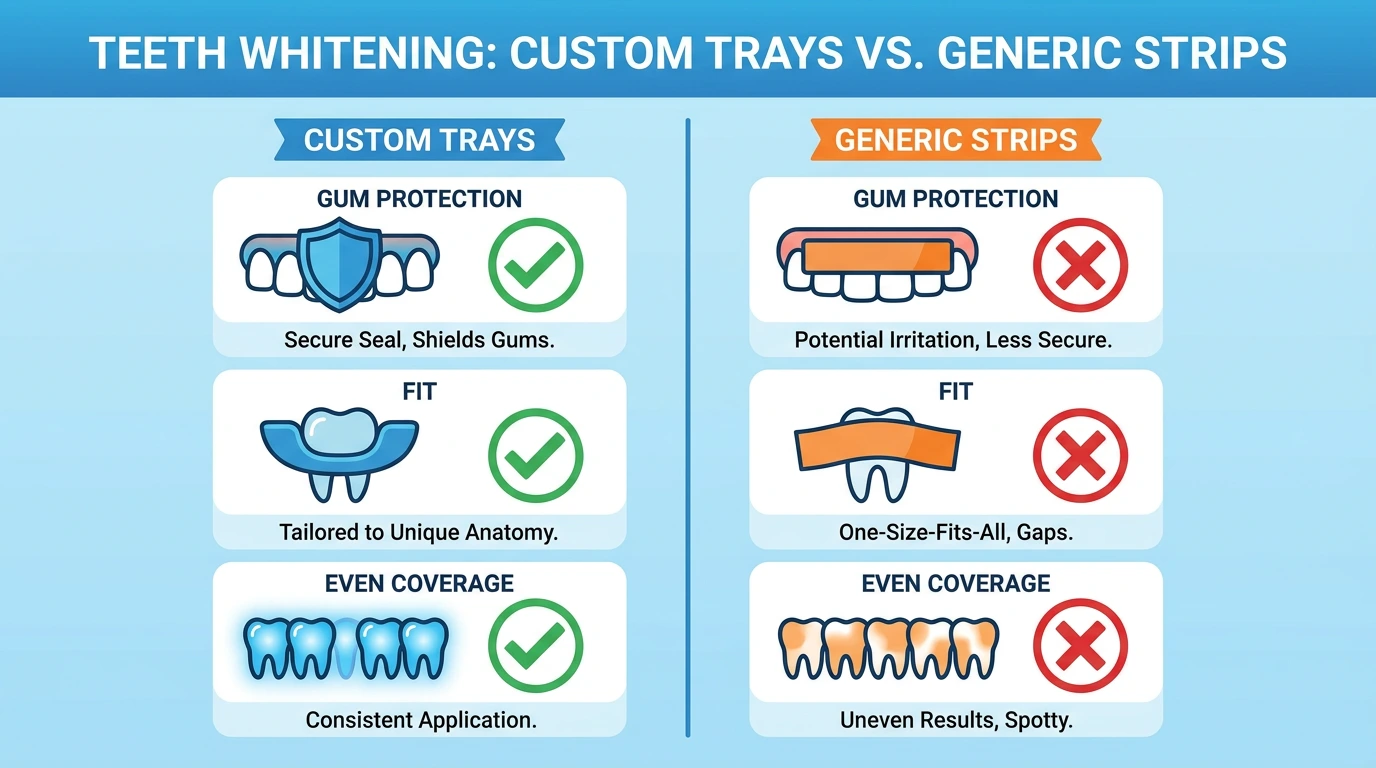
Professional teeth whitening provides custom-fitted application trays and clinically formulated gels that protect soft oral tissues far better than generic retail strips. While over-the-counter strips offer convenience, their flat, one-size-fits-all plastic design often allows saliva to dilute the gel and causes active bleach to leak onto gum tissue.

Comparing clinical care to store-bought kits helps clarify why professional oversight yields more reliable aesthetic results:

  • Custom appliance fit: Professionally made trays conform directly to your unique dental anatomy, holding whitening solution securely against enamel while shielding delicate gum margins.
  • Balanced chemical concentrations: Prescription whitening gels include desensitizing agents like potassium nitrate and fluoride to soothe sensitive nerve endings during treatment.
  • Pre-treatment dental evaluations: A clinical exam ensures existing restorations, cavities, or exposed root surfaces are documented and protected before active bleaching begins.
  • Even shade distribution: Generic strips struggle to cover curved or misaligned teeth, often leaving yellow borders near the gumline that require corrective cosmetic care.
An infographic compares custom whitening trays to generic strips across gum protection, fit, and even coverage, pairing trays with green checkmarks and strips with red X marks.

Protecting Your Smile While Reaching Your Cosmetic Goals

Achieving a luminous smile should never come at the expense of your long-term dental health. Whitening strips serve a valuable purpose for brief, occasional touch-ups, but treating them as a daily hygiene staple compromises the natural resilience of your teeth. Preserving your protective enamel is the most effective way to keep your smile vibrant, functional, and resistant to stains for years to come.

If you have concerns about chronic discoloration that does not respond to surface whitening, underlying issues such as internal staining, thin enamel, or developmental variations may be present. In these situations, alternative cosmetic dentistry solutions such as dental bonding or veneers can deliver uniform aesthetic improvements without subjecting your teeth to repeated chemical wear.

Prioritizing regular checkups and professional cleanings creates the foundation for lasting cosmetic success. Our team in Monument is committed to helping you navigate treatment options safely, ensuring your cosmetic choices protect your smile's strength and comfort.

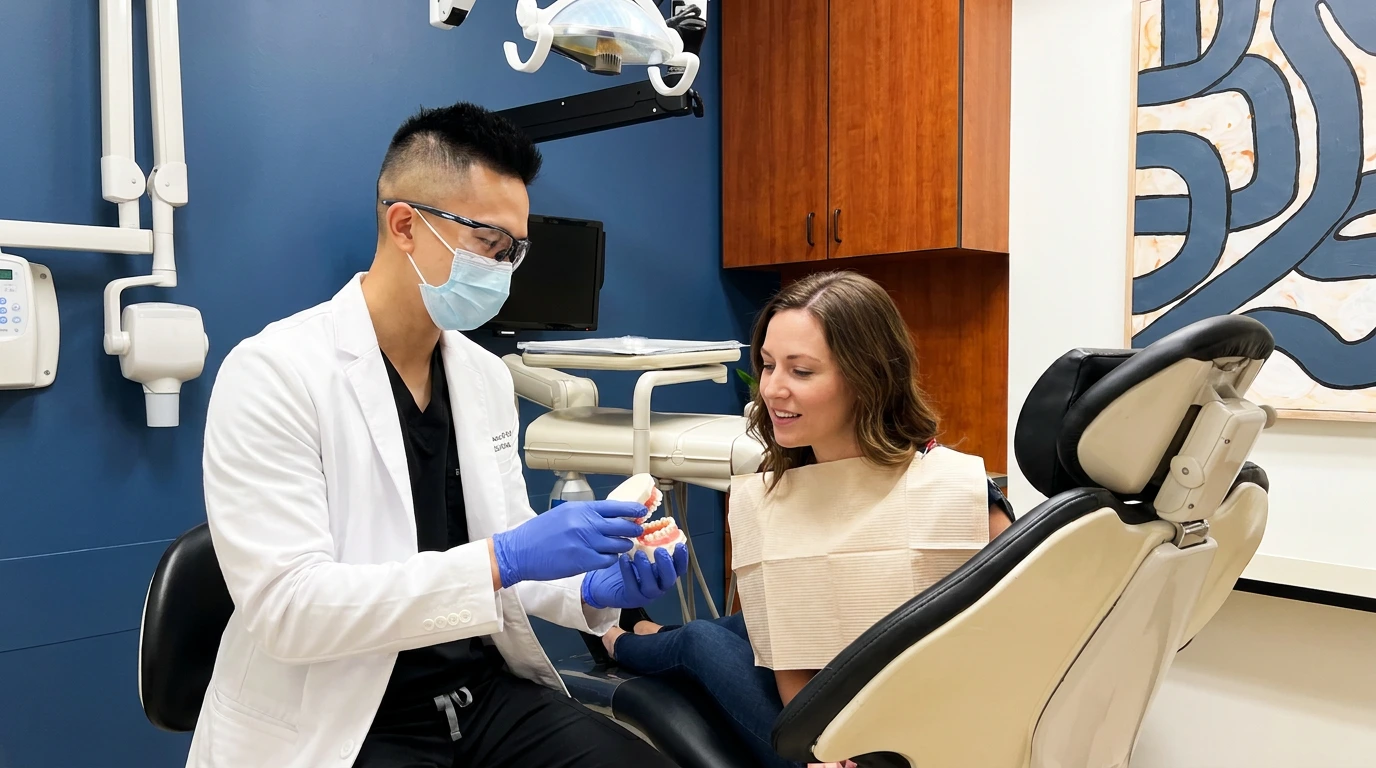
Dr. Eric Nguyen wears a lab coat, mask, and gloves as he shows a dental model to a patient sitting in a dental chair.
Categories:
No items found.

Frequently Asked Questions

1. Are whitening strips safe for daily use long term?
No, whitening strips are not safe for daily long-term use. Continuous application can wear down enamel, cause tooth sensitivity, and irritate gum tissues. They should only be used in brief cycles.

2. How often can you use whitening strips safely?
You can generally use whitening strips safely once or twice per year. A typical treatment cycle lasts seven to fourteen consecutive days according to the manufacturer's directions.

3. Can overusing whitening strips permanently damage your teeth?
Yes, overusing whitening strips can damage enamel in ways that do not reverse. Once enamel thins or erodes from excess chemical exposure, it cannot regrow, leaving teeth more vulnerable to decay and discoloration.

4. Why do my teeth hurt after using whitening strips?
Teeth hurt after whitening because peroxide penetrates the enamel to reach the microscopic dentinal tubules, irritating the inner dental nerve. This sensitivity is usually temporary and fades within several days.

5. What should I do if my gums turn white from whitening strips?
If your gums turn white, remove the strips and rinse your mouth with warm water. White patches indicate a mild chemical burn from leaking gel, which typically heals within a few days.

6. Do whitening strips work on crowns, fillings, or veneers?
No, whitening strips only lift stains from natural dental enamel. Restorations like crowns, fillings, and veneers do not respond to peroxide bleaching agents.

7. How long should I wait between whitening strip cycles?
You should wait at least six months between full cycles of whitening strips. This rest window gives your teeth time to remineralize naturally through minerals present in saliva.

8. Can I use whitening strips every day if I only leave them on for five minutes?
Shortening application time does not make daily, indefinite strip usage safe. Daily chemical exposure still disrupts enamel mineral balance and can cause cumulative tissue irritation over time.

9. Is professional teeth whitening safer than over-the-counter strips?
Yes, professional teeth whitening is safer because custom trays keep bleaching gel away from gums and the process is monitored by a qualified dentist.

10. When should I see a dentist about whitening sensitivity?
You should see Dr. Eric Nguyen if tooth pain persists beyond forty-eight hours after stopping whitening treatments, or if you notice severe gum recession or dark spots. He can thoroughly evaluate your smile and provide targeted care options.
Book Your Appointment Today

New patients are always welcome. Reach out online or give us a call to get started.

Thank you for booking your appointment!

We've received your request and will contact you soon to confirm the details. We look forward to seeing you at Advanced Dental & Implant Center.

Oops! Something went wrong while submitting the form.

Pay Your Bill {{si}}Online{{/si}}

Pay your bill quickly and securely from the comfort of your home. We make it easy to stay on top of your payments.

Financing Options Offered:
  • Quick & Convenient

  • Secure Payments

  • Multiple Payment Options

  • Easy Payment History

Scan To Pay

Scan the QR code with your smartphone to complete your payment in just a few moments.

Scan this QR code with your smartphone to securely pay your bill online at Advanced Dental & Implant Center
Pay Online Now →
Related Blog Posts

Stay Informed with Expert Insights & Tips About Dental Care

A close-up view of a patient's mouth with a clear whitening strip applied across the upper front teeth.
11.6.2026

Are Whitening Strips Safe for Daily Use?

Whitening strips brighten teeth in brief cycles, but daily use risks enamel erosion, nerve sensitivity, and gum burns.

Cameron sits at a wooden table in a sunlit kitchen, holding a spoon with food near his mouth, with a bowl, mug, and newspaper on the table.
10.7.2026

What to Know Before Your Dental Bone Graft

Dental bone grafting rebuilds jawbone foundation for implants, requiring evaluation, procedure, and careful recovery for long-term oral health.

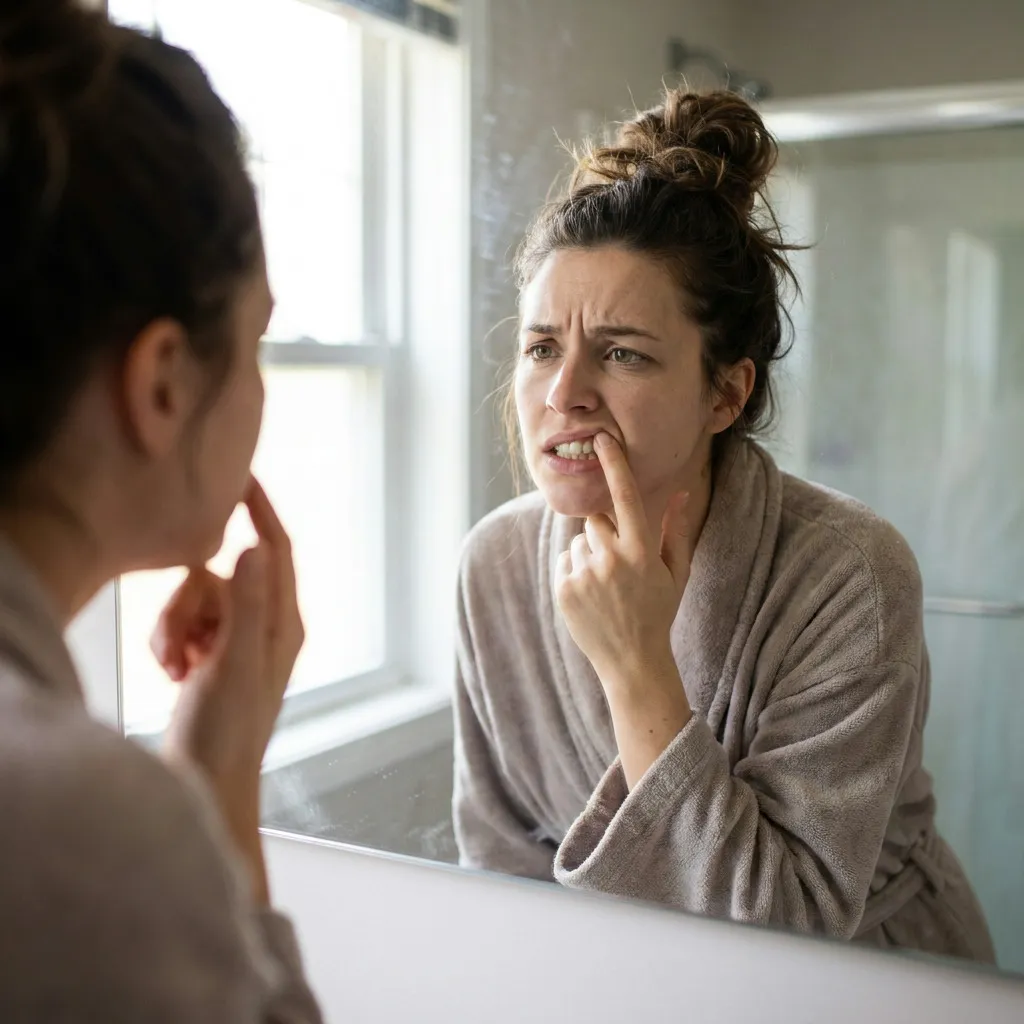
Sarah, wearing a brown robe with her hair in a messy bun, looks into a bathroom mirror, lifting her upper lip with her finger to inspect her teeth with a concerned expression.
9.3.2026

Are Whitening Strips Bad for Your Teeth?

Improper use of whitening strips can cause temporary tooth sensitivity and gum irritation, but professional guidance ensures safe, effective brightening.